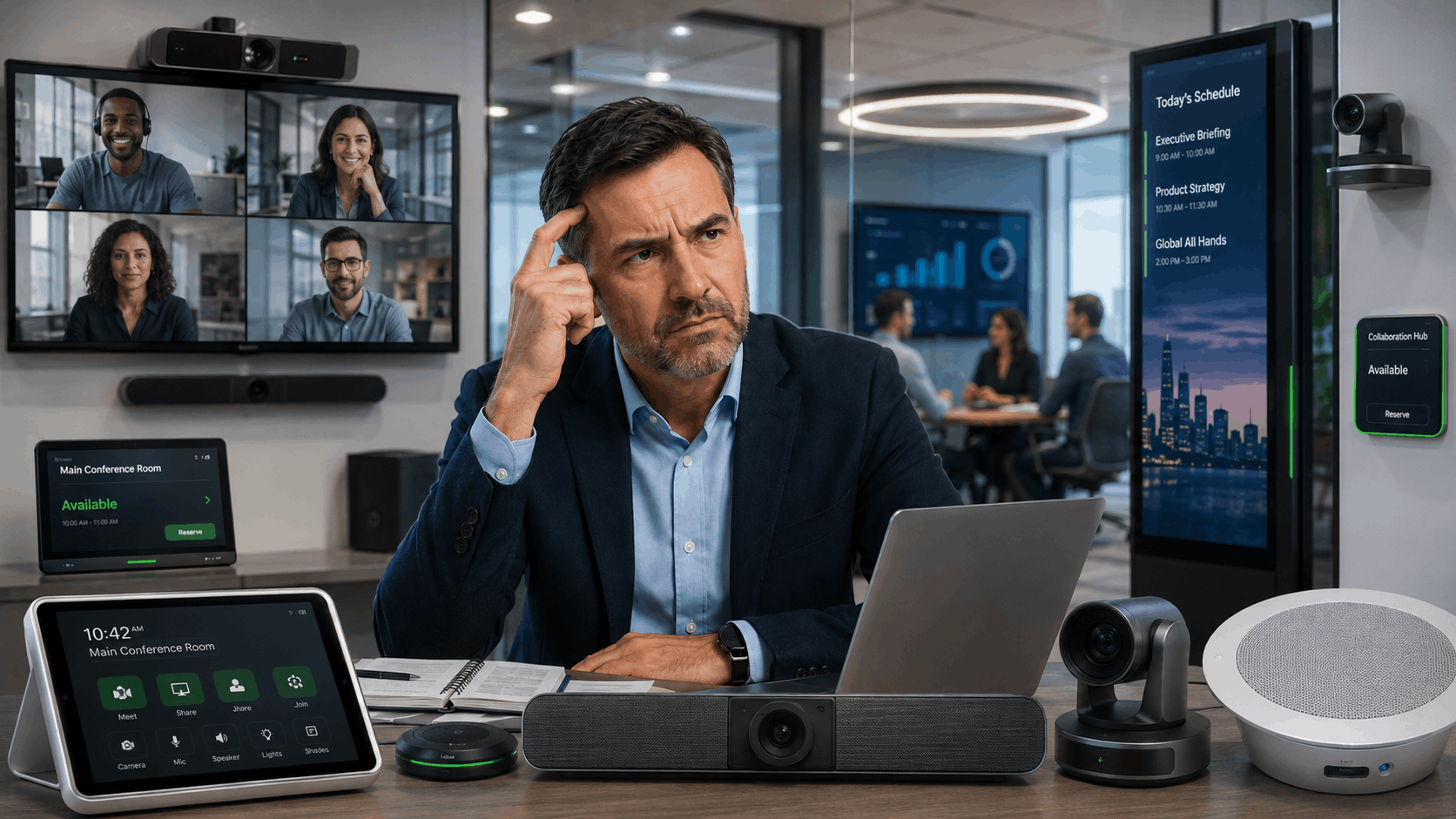
Tight Budgets, Bigger Expectations: How to Prioritize Workplace Technology Investments
Workplace technology expectations have not decreased just because budgets are tighter.
Employees still expect meetings to start on time. Executives need reliable communication. IT teams must support aging systems, and facilities teams still hear complaints when meeting spaces do not work as expected. At the same time, organizations need collaboration environments that support productivity, training, client interactions, and decision-making.
The difference today is that there is less room for trial and error.
When budgets are under pressure, every technology investment must deliver measurable value. Leaders need to determine what is urgent, what is important, what can be phased, and what can wait.
At Level 3 Audiovisual, we believe effective workplace technology planning starts with business priorities, not equipment lists. As workplace technology decisions shift from individual product upgrades to long-term strategy, the goal is not simply deciding what to replace. It is identifying which investments will reduce friction, improve reliability, and support the organization’s most important work.
Why Workplace Technology Decisions Feel More Complex
Workplace technology no longer exists in separate silos. Meeting rooms now depend on collaboration platforms, network infrastructure, room controls, security requirements, scheduling tools, cloud management, and user support processes.
When everything works together, the experience is seamless. When it does not, even simple meetings can become frustrating.
Many organizations are balancing:
- Aging AV systems
- Hybrid meeting requirements
- Rising user expectations
- Limited support resources
- Multiple office locations
- Pressure to standardize technology
- Increased budget scrutiny
- The need to reduce downtime
The challenge is that not every issue deserves the same level of urgency.
A room that feels slightly outdated may not require immediate attention. A client-facing space that regularly experiences failures is a different story. Likewise, a low-use room with older equipment may be acceptable for another year, while a heavily used training room generating constant support tickets may be costing the organization valuable time and resources.
Effective prioritization helps separate preferences from business impact.
Start With Business Outcomes, Not Equipment
When budgets are tight, many organizations begin by asking, “What can we afford?”
A better question is, “What are we trying to accomplish?”
Before discussing displays, cameras, microphones, or room upgrades, leaders should define the business outcomes they want technology to support.
For example:
- Reducing meeting delays
- Improving hybrid collaboration
- Lowering support requests
- Enhancing executive or client-facing spaces
- Standardizing rooms across locations
- Extending the life of existing systems
- Reducing risk from unsupported equipment
- Preparing for future growth
Starting with outcomes helps prevent reactive spending.
Without a business-focused approach, organizations can invest in highly visible upgrades while overlooking the spaces causing the most disruption. They may add new features before addressing reliability issues or replace equipment without improving the support model behind it.
Every investment should have a clear business purpose. If it solves a recurring problem, reduces risk, or improves a critical workflow, it likely deserves priority.
What to Fix Now
Some workplace technology issues should not be postponed because they directly affect productivity, reliability, or business operations.
Importantly, “fix now” does not always mean replacing an entire room. Often, it means addressing the specific issue creating the greatest disruption.
Priority investments often include:
- Rooms with recurring audio, video, or control failures
- Executive or client-facing spaces that underperform
- High-use rooms generating frequent support tickets
- End-of-life or unsupported equipment
- Systems creating security or compatibility concerns
- Spaces that cannot reliably support standard meeting platforms
- Training or operational rooms critical to daily workflows
These are the areas where delays can become costly.
A malfunctioning microphone in a rarely used room may be inconvenient. Poor audio in a boardroom, training space, or client presentation room can undermine confidence and waste valuable time. Likewise, unreliable systems in heavily used spaces often create ongoing support burdens that affect multiple teams.
The goal is not to treat every issue as urgent. It is to identify the problems already affecting business performance and address them first.
What to Plan for Next
Not every important project requires immediate action. Many investments are best handled through a phased strategy.
These projects may not be causing daily disruptions today, but they contribute to long-term efficiency, consistency, and scalability.
Examples include:
- Standardizing room designs
- Developing a technology roadmap
- Improving remote monitoring capabilities
- Updating documentation and support processes
- Aligning rooms around preferred collaboration platforms
- Refreshing systems before they reach end of life
- Preparing for office expansion or redesign
- Improving user training and adoption
These initiatives often deliver significant long-term value.
For example, standardized room designs simplify future upgrades and support. Remote monitoring can help IT teams identify issues before users report them. A phased refresh strategy can reduce surprise capital expenses and improve budget forecasting.
Planning ahead also helps leaders present stronger business cases for future investments by showing how individual projects fit into a broader strategy.
What Can Wait
A strong prioritization process should also identify what does not need immediate investment.
This can be difficult. Stakeholders often want the latest features, and some spaces may appear outdated even though they still function effectively. However, responsible planning requires distinguishing between needs and wants.
Projects that may be deferred include:
- Premium features for low-use rooms
- Cosmetic upgrades that do not improve functionality
- Technology without a clear business use case
- Specialty spaces lacking organizational alignment
- Full replacements when targeted repairs are sufficient
- Upgrades better suited for a future phase
The objective is not to avoid spending. It is to ensure spending is directed where it creates the greatest value.
If a system remains reliable, supportable, and aligned with user needs, replacement may not be necessary today. If it is creating operational challenges, delaying action may ultimately cost more.
A Practical Framework for Prioritization
When multiple departments are competing for resources, leaders need a consistent way to evaluate opportunities.
One effective approach is to assess each room, system, or project against several key criteria:
- Business criticality: How important is the space to operations, leadership, training, or client engagement?
- User impact: How many people are affected and how frequently?
- Support burden: How much support time does the environment require?
- Risk: What happens if the system fails?
- Cost of delay: Will postponing the investment increase future costs?
- Scalability: Does the investment support future growth and standardization?
- Alignment: Does it fit the organization’s long-term technology strategy?
Once evaluated, projects can be grouped into four categories:
- Fix Now: High-impact issues affecting reliability or business operations
- Plan Next: Strategic improvements that should be phased into future budgets
- Monitor: Systems that are functioning adequately but require observation
- Defer: Projects that currently lack sufficient business justification
This framework helps organizations make more objective decisions and communicate priorities more effectively to leadership and finance teams.
Why a Roadmap Matters
A workplace technology roadmap is more than a planning document. It is a budgeting tool.
Without a roadmap, organizations often make reactive decisions. A room fails, a complaint surfaces, or a stakeholder requests an upgrade, and funding is allocated based on urgency rather than strategy.
A roadmap creates a broader view of technology needs across rooms, locations, and support requirements. It helps organizations:
- Avoid surprise spending
- Phase investments over time
- Standardize user experiences
- Plan around equipment lifecycles
- Reduce emergency support requests
- Align stakeholders around priorities
- Justify budgets more effectively
Perhaps most importantly, a roadmap helps organizations avoid all-or-nothing thinking. Progress does not require upgrading every room at once. Often, the smartest approach is to address the highest-priority spaces first, establish standards, and phase future improvements over time.
Better Prioritization Leads to Better Outcomes
Tight budgets do not have to mean stalled progress. They simply require more disciplined decision-making.
Organizations that gain the most value from workplace technology are not necessarily the ones spending the most. They are the ones that understand where technology supports business goals, where it creates friction, and where investments will have the greatest impact.
At Level 3 Audiovisual, we believe workplace technology decisions should be practical, strategic, and aligned with real business needs. Some systems require immediate attention. Others belong in a future phase. The key is having a clear framework for making those decisions.
If your organization is balancing tighter budgets with growing workplace technology expectations, Level 3 Audiovisual can help assess your environment, identify priorities, and develop a roadmap that supports both current needs and long-term goals.
FAQ: Prioritizing Workplace Technology Investments
How should organizations prioritize workplace technology investments?
Organizations should evaluate investments based on business impact, user experience, support burden, risk, cost of delay, and alignment with long-term technology goals.
What AV upgrades should be addressed first?
High-use rooms, executive spaces, client-facing environments, recurring system failures, and unsupported equipment typically deserve the highest priority.
Do tight budgets mean technology upgrades should be delayed?
Not necessarily. Tight budgets require better prioritization, not automatic postponement. Some investments reduce risk, improve productivity, or prevent larger costs later.
What projects can usually wait?
Low-use spaces, cosmetic upgrades, premium features without a clear business purpose, and projects with limited operational impact can often be deferred.
Why is a workplace technology roadmap important?
A roadmap helps organizations plan strategically, avoid reactive spending, standardize technology decisions, and align investments with long-term business objectives.

